Leg traps, often associated with historical hunting practices, represent a surprisingly versatile and increasingly relevant technology in modern applications. While traditionally employed for capturing animals, the core principles of controlled engagement, reliable triggering mechanisms, and secure containment are being adapted for a range of critical functions, from wildlife management and invasive species control to innovative engineering solutions. Understanding the intricacies of leg traps, beyond their historical context, offers valuable insights into mechanics, material science, and responsible resource management.
The global need for effective and adaptable capture and control mechanisms is growing. Climate change is shifting animal distributions, leading to increased human-wildlife conflict. Invasive species threaten biodiversity and agricultural productivity. Furthermore, advancements in engineering often require robust and reliable components for testing and containment. Leg traps, refined and modernized, offer cost-effective and efficient solutions to these complex challenges, making their study and application increasingly important worldwide.
This exploration delves into the fundamental aspects of leg traps, examining their design, applications, advantages, and future potential. We’ll navigate the nuances of their construction, assess their impact on various industries, and address the ethical considerations that accompany their use. Ultimately, this aims to provide a comprehensive understanding of a technology often overlooked but brimming with practical value.

Introduction to Leg Traps
The term "leg traps" conjures images of historical hunting techniques, but contemporary leg traps are far more sophisticated and diversified. Modern iterations utilize advanced materials like stainless steel and engineered polymers, focusing on humane capture and targeted species control. Beyond their role in wildlife management, the underlying principles of these mechanisms are finding innovative applications in robotics, security systems, and even specialized industrial tooling.
The efficacy of leg traps stems from their inherent simplicity and reliability. They operate on basic mechanical principles, requiring minimal power or maintenance, making them suitable for remote or challenging environments. This characteristic is particularly valuable in scenarios where continuous monitoring or complex infrastructure is impractical. Furthermore, ongoing research focuses on refining trap designs to minimize stress and injury to captured animals, addressing ethical concerns and promoting responsible wildlife management.
Defining Leg Traps
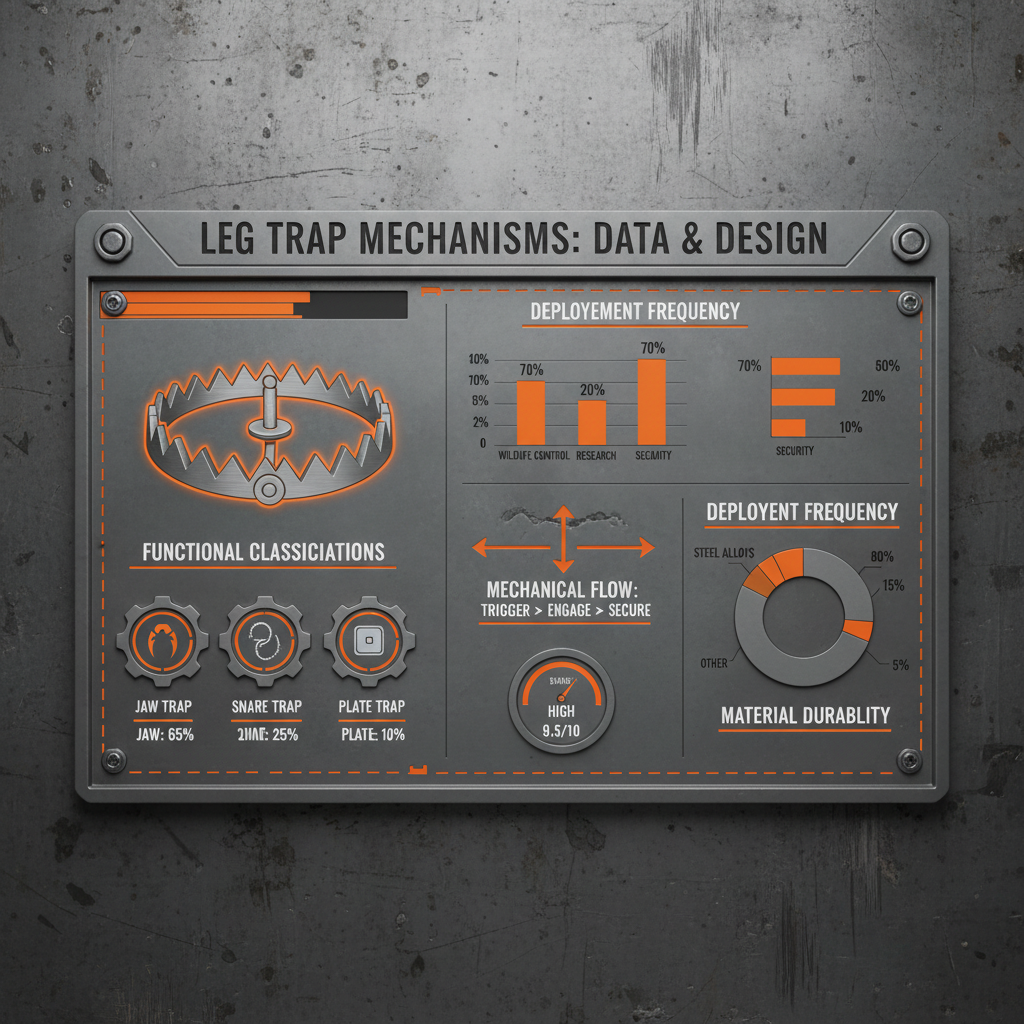
At its core, a leg trap is a device designed to restrain an animal by its leg. Historically, these traps were often constructed from metal and relied on spring-loaded jaws to secure the limb. Modern definitions encompass a wider range of devices, including cable restraints, snares, and non-lethal foothold traps designed for research or relocation purposes. The defining characteristic remains the intentional immobilization of a leg to facilitate capture or control.
The connection to modern industry lies in the fundamental engineering principles employed in their construction: controlled force application, trigger mechanisms, and secure containment. These principles translate directly to applications in automated assembly lines, robotic grippers, and safety devices. Understanding the design of leg traps provides insights into creating reliable and efficient mechanical systems.
Crucially, the use of leg traps is increasingly regulated, with a growing emphasis on humane capture and ethical considerations. Responsible use necessitates a thorough understanding of target species, trap design, and best practices for minimizing animal welfare impacts. This shift towards ethical practices is driving innovation in trap design and promoting the development of more selective and humane capture methods.
Core Components of Leg Traps
Several key factors contribute to the effective and reliable operation of leg traps. Firstly, Durability is paramount; traps must withstand harsh environmental conditions, repeated use, and the forces exerted by captured animals. High-quality materials, such as stainless steel and corrosion-resistant alloys, are essential for ensuring longevity and preventing failure in the field. Secondly, the Trigger Mechanism needs to be sensitive enough to respond to the target species, yet resistant to accidental activation by non-targets.
Thirdly, Jaw Design dictates the type of hold and the potential for injury. Modern traps often feature padded jaws or offset designs to minimize trauma to the animal's leg. Fourthly, Setting and Resetting Ease is critical for efficient operation, particularly in large-scale deployment scenarios. A user-friendly design reduces setup time and minimizes the risk of operator error. Finally, Concealment plays a crucial role in achieving successful capture; effective traps blend into their surroundings, minimizing detection by wary animals.
These components work in synergy to ensure a reliable and efficient capture process. The specific configuration and design of each element are tailored to the target species, the intended application, and the prevailing environmental conditions. Continuous innovation in materials science and engineering is driving improvements in all these areas, leading to more humane and effective leg trap systems.
Global Applications of Leg Traps
The applications of leg traps extend far beyond traditional hunting. In Wildlife Management, they are used to monitor populations, conduct research, and control invasive species. For instance, in Australia, leg traps are employed to manage feral cats and foxes, which pose a significant threat to native wildlife. In Agriculture, they protect crops from damage caused by pest animals like rabbits and deer.
Ecological Restoration projects frequently utilize leg traps for controlling invasive species that hinder the recovery of native ecosystems. In remote Industrial Zones, particularly in mining and forestry, leg traps can be used to manage wildlife encroaching on operational areas, preventing potential hazards and conflicts. Furthermore, leg trap technology informs the design of robotic end-effectors used in automated manufacturing processes, mimicking the gripping and holding capabilities found in natural systems.
Leg traps are also invaluable in Scientific Research, allowing biologists to capture and study animals in their natural habitat. In post-disaster relief operations, modified trap designs can be used to safely capture and relocate displaced wildlife, minimizing human-animal conflict in affected areas. These diverse applications underscore the adaptability and enduring relevance of this often-misunderstood technology.
Leg Trap Effectiveness by Method
Advantages and Long-Term Value
The benefits of utilizing well-designed and responsibly deployed leg traps are multifaceted. Economically, they often provide a Cost-Effective solution for wildlife management and pest control, compared to alternative methods like fencing or chemical deterrents. From a Sustainability perspective, they can contribute to the long-term health of ecosystems by controlling invasive species and preventing damage to native flora and fauna.
The Social Impact is significant, as effective wildlife management reduces human-animal conflicts, protecting livestock, crops, and even human lives. Furthermore, the inherent Reliability of leg traps, stemming from their simple mechanical design, makes them a valuable tool in remote or challenging environments where access to advanced technologies is limited. They foster a sense of Safety and security for communities living in close proximity to wildlife.
Future Trends and Innovation
The future of leg traps lies in integrating smart technologies and prioritizing animal welfare. Sensor Integration – embedding sensors to remotely monitor trap status, identify captured species, and assess animal stress levels – will revolutionize data collection and improve response times. Biodegradable Materials are being explored to minimize the environmental impact of lost or abandoned traps.
AI-Powered Selectivity – developing traps that can differentiate between target and non-target species using image recognition and machine learning – promises to significantly reduce unintended captures. These advancements align with the growing emphasis on Sustainable and ethical wildlife management practices, ensuring the long-term viability of these essential tools.
Challenges and Solutions
Despite their benefits, leg traps face challenges related to animal welfare and public perception. Non-Target Captures remain a concern, requiring ongoing refinement of trap designs and deployment strategies. Ethical Concerns surrounding animal suffering necessitate a commitment to humane trap designs and prompt removal of captured animals. Regulatory Hurdles and public opposition can limit the use of leg traps, even in situations where they offer the most effective solution.
To overcome these challenges, Collaboration between researchers, wildlife managers, and animal welfare organizations is crucial. Investing in Education to promote responsible trap use and dispel misconceptions is essential. Furthermore, continuous Innovation in trap design, focusing on selectivity and minimizing stress, is paramount. Embracing a proactive and transparent approach to addressing these concerns will ensure the continued responsible application of leg trap technology.
Summary of Leg Trap Challenges and Mitigation Strategies
| Challenge |
Severity (1-10) |
Mitigation Strategy |
Implementation Cost (USD) |
| Non-Target Capture |
8 |
Selective Trap Design, Baiting Strategies |
$50 - $200 |
| Animal Welfare Concerns |
9 |
Padded Jaws, Quick-Release Mechanisms |
$100 - $300 |
| Public Perception |
7 |
Education, Transparency, Community Engagement |
$20 - $100 (per campaign) |
| Regulatory Restrictions |
6 |
Advocacy, Data-Driven Justification |
$500 - $5,000 (per region) |
| Trap Theft/Vandalism |
5 |
Camouflaging, Secure Anchoring, Monitoring |
$20 - $100 |
| Environmental Impact |
4 |
Biodegradable Materials, Responsible Disposal |
$50 - $150 |
FAQS
Ethical considerations surrounding leg traps center on minimizing animal suffering. This involves using traps designed to reduce injury (e.g., padded jaws, quick-release mechanisms), regularly checking traps to ensure prompt animal release, and employing selective trapping methods to avoid capturing non-target species. Responsible trap users prioritize animal welfare alongside management goals and adhere to all relevant regulations.
Leg trap usage is heavily regulated, varying significantly by region. It's crucial to consult local wildlife agencies for specific permits, licensing requirements, permissible trap types, and seasonal restrictions. Ignorance of the law is not a defense, and violations can result in hefty fines and legal penalties. Always prioritize compliance with all applicable regulations.
Alternatives include exclusion fencing, habitat modification, repellents, relocation programs, and sterilization. The suitability of each method depends on the specific species, the extent of the problem, and the available resources. Often, an integrated pest management (IPM) approach, combining multiple strategies, is most effective.
Leg traps should be checked frequently – ideally, at least twice daily – to minimize the time an animal spends confined. Prolonged confinement can cause stress, dehydration, and injury. Regular checking also allows for the prompt release of non-target captures and ensures the trap is functioning correctly. Many regulations legally mandate specific checking frequencies.
Traditionally, leg traps were made from steel. Modern traps increasingly utilize materials like stainless steel for corrosion resistance, and engineered polymers for components like jaws and springs, offering improved durability and reduced weight. The choice of material depends on the intended application and environmental conditions.
Technology has enabled significant advancements. Sensor integration allows for remote monitoring of trap status, species identification, and stress levels. AI-powered selectivity aims to differentiate between target and non-target species. Biodegradable materials offer eco-friendly alternatives. These innovations improve efficiency, reduce animal suffering, and promote responsible wildlife management.
Conclusion
Leg traps, despite their historical associations, represent a constantly evolving technology with broad applications extending far beyond traditional hunting. From wildlife management and invasive species control to industrial engineering and scientific research, the fundamental principles of controlled engagement and secure containment remain remarkably relevant. The key to responsible use lies in prioritizing animal welfare, adhering to ethical guidelines, and embracing continuous innovation.
Looking ahead, the integration of smart technologies, biodegradable materials, and AI-powered selectivity will redefine the role of leg traps in a sustainable future. Continued collaboration between researchers, policymakers, and wildlife managers is crucial to address ongoing challenges and unlock the full potential of this versatile and often misunderstood technology. To learn more about responsible trap usage and explore advanced solutions, visit our website: leg traps.