Leading Anti Bird Net Manufacturers Delivering Crop and Infrastructure Protection

0%

Table of Contents

Look, anti bird net manufacturers... it’s a surprisingly hot topic right now. Everyone's talking about maximizing yield, protecting crops, industrial safety - all stuff that comes down to keeping birds out. Used to be, it was just farmers slapping up some netting. Now? It’s a whole engineering discipline. And honestly, the demand is only going up. Climate change messing with migration patterns, more intensive agriculture… birds are getting bolder, or we’re encroaching on their space, either way, there’s a problem. It's not just agriculture either; we're seeing a lot of industrial applications – keeping birds away from power plants, airports, that kind of thing.

You wouldn’t believe the number of times I've seen manufacturers get tripped up on seemingly simple things. Like knot strength. People think any knot will do. They're wrong. Especially when you’re talking about larger scale installations. Or material degradation. UV resistance is huge. Cheap plastic netting looks great at the factory, but after six months in the sun… well, let’s just say it looks like spaghetti. To be honest, a lot of these smaller suppliers just don't understand long-term performance. They're focused on the initial cost, not the lifecycle.

And it's not just about specs on a datasheet, you know? It’s about feel. The material needs to be robust, but also flexible enough to work with. We use a lot of HDPE – high-density polyethylene. It's got a slightly waxy feel, kinda smells like… well, plastic, I guess. It’s strong, resists rot, and stands up to a decent amount of UV. There's also polypropylene, which is lighter, but not as tough. We’re starting to see some experiments with recycled materials, which is good, but quality control is a nightmare. I encountered a batch at a factory in Ningbo last time that had so much contamination, it basically fell apart when you tried to stretch it. Strangely, they still tried to sell it as "premium grade."
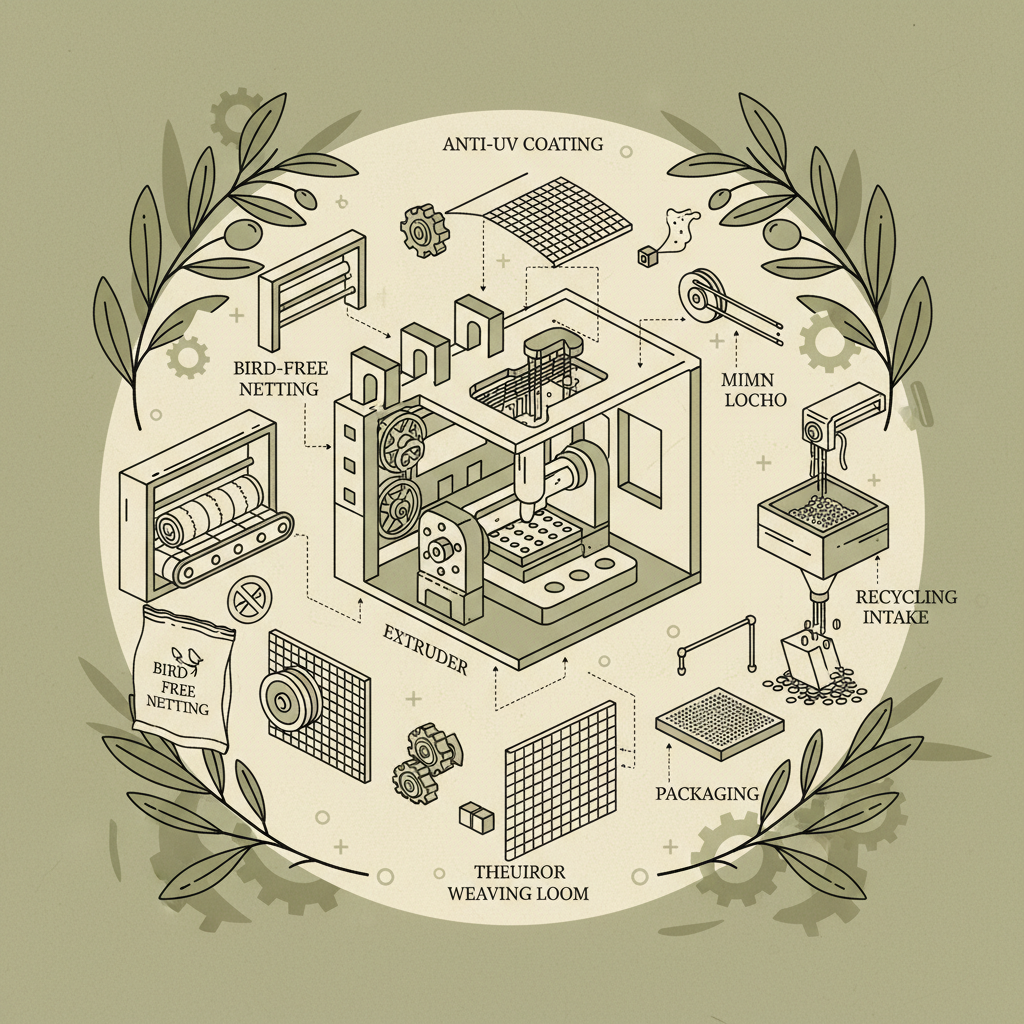
anti bird net manufacturers

Global Relevance of Anti Bird Net Manufacturers

anti bird net manufacturers

The UN estimates that agricultural losses due to bird damage run into the billions annually. Billions! It’s a massive problem for food security, especially in developing countries. But it’s not just about food. It's about infrastructure protection, preventing bird strikes at airports, and even protecting sensitive equipment. There’s an ISO standard now, 22000, related to food safety, and bird control is becoming a more significant part of that. It’s kind of crazy how much regulation is coming down the pipeline.

Honestly, the biggest challenge is scalability. You can make a great net in a small workshop, but can you ramp up production to supply a whole region? That’s where the larger anti bird net manufacturers really shine – they have the infrastructure, the supply chains, and the quality control systems in place. But even then, it's a constant battle. And don’t get me started on the copycats…

Defining Anti Bird Net Manufacturers

Alright, so what are anti bird net manufacturers? Basically, they’re companies that design, produce, and distribute netting specifically designed to prevent birds from accessing certain areas. It sounds simple, right? But there's a lot more to it than just weaving some plastic. It's about understanding bird behavior, material science, and engineering principles. It’s not a glamourous job, but someone’s gotta do it.

It’s connected to modern industry because, well, everything is interconnected these days. Food production, aviation safety, renewable energy… all rely on protecting assets from bird damage. And humanitarian needs? Think about protecting crops in disaster-stricken areas. A good net can be the difference between a harvest and starvation. It's serious stuff.

These manufacturers aren't just selling a product, they're selling peace of mind. They're selling protection. They’re selling a solution to a real-world problem. Anyway, I think that’s a pretty good way to put it.

Core Components of Quality Netting

Durability is number one. You need a net that can withstand the elements – sun, rain, wind, even snow. That means using high-quality materials, like the HDPE I mentioned earlier, and employing robust weaving techniques. A weak net is a useless net.

Scalability is huge, especially for large-scale installations. Can the manufacturer produce enough netting to cover a multi-acre vineyard? Can they deliver it on time? That’s a big factor. Cost efficiency, obviously, is important too. But you get what you pay for. Cheap netting won’t last, and you’ll end up replacing it more often, which ultimately costs more in the long run. Flexibility is key too – different applications require different mesh sizes and netting configurations. And finally, UV resistance. I cannot stress that enough.

These factors all translate directly to practical applications. For example, a vineyard might need a fine mesh netting to protect grapes from smaller birds, while an airport might need a heavier-duty netting to deter larger birds from runways. An industrial plant might need netting that’s resistant to chemical corrosion. It really depends on the specific needs of the client.

Have you noticed that a lot of manufacturers try to push “one-size-fits-all” solutions? That rarely works. You need a manufacturer who’s willing to work with you to develop a custom solution that meets your specific requirements.

Global Applications and Use Cases

We're seeing a huge demand in agriculture, obviously – vineyards, orchards, vegetable farms. But also aquaculture, protecting fish ponds from predatory birds. It's massive in South America, especially in Brazil, where they have a huge poultry industry and need to keep birds away from the flocks.

Industrial applications are growing rapidly. Airports use netting to prevent bird strikes, which can be catastrophic. Power plants use it to protect transformers and substations from bird droppings, which can cause short circuits. Mining operations use it to protect equipment and prevent worker injuries. It’s everywhere, honestly.

In post-disaster relief operations, netting can be used to protect emergency food supplies from birds. In remote industrial zones, it’s often the only reliable way to keep birds away from critical infrastructure. It’s a surprisingly versatile product.

Anti Bird Net Manufacturers Performance Metrics

Advantages and Long-Term Value

The tangible benefits are pretty clear – reduced crop losses, increased safety, protection of infrastructure. But there’s also a sustainability aspect. Protecting crops means reducing the need for pesticides, which is good for the environment. And a well-designed net can last for years, reducing the need for frequent replacements.

It’s about safety, dignity, and innovation. Farmers can sleep easier knowing their crops are protected. Industrial workers can work in a safer environment. And manufacturers are constantly innovating to develop more effective and sustainable solutions. That’s the long-term value.

Future Trends and Innovations

We’re starting to see a lot of interest in biodegradable netting materials. It's a tough challenge – you need something that’s strong enough to withstand the elements, but also breaks down naturally at the end of its life. There's also research into bird-repellent coatings that can be applied to netting, making it even more effective.

Digital transformation is playing a role too. Some manufacturers are using drones to inspect netting installations and identify areas that need repair. Automation is also increasing, with robots being used to assemble and package netting. And, of course, there’s the ongoing push for sustainability.

Challenges and Solutions

The biggest challenge is still cost. High-quality netting can be expensive, and some customers are reluctant to pay for it. But, as I said before, you get what you pay for. Another challenge is installation. It can be tricky to install netting correctly, especially on large structures.

One solution is to offer installation services. Another is to provide detailed installation instructions and training. We’re also working on developing easier-to-install netting systems, with pre-fabricated components and quick-connect fasteners. It's not rocket science, but it takes effort.

Last month, that small boss in Shenzhen who makes smart home devices insisted on changing the interface to instead of the standard micro-USB on our sensor kits used for the netting’s tension monitoring system, and the result was a three-week delay and a lot of frustrated engineers. It’s a small thing, but it shows how important it is to listen to the experts.

Core Analysis of Challenges and Solutions in Anti Bird Net Manufacturing

Challenge Impact Level (1-5) Potential Solution Implementation Cost (1-5)
High Initial Cost 4 Offer Financing Options 2
Complex Installation 3 Pre-fabricated Installation Kits 3
Material Degradation 5 UV-Stabilized Polymers 4
Supply Chain Disruptions 4 Diversify Supplier Base 2
Lack of Customization 2 Modular Netting Designs 3
Inconsistent Quality Control 3 Automated Inspection Systems 5

FAQS

What is the expected lifespan of anti-bird netting in harsh coastal environments?

In coastal areas, expect a shorter lifespan due to salt spray and UV exposure. Typically, standard HDPE netting will last 3-5 years, but UV-stabilized netting can extend that to 5-7 years. Regular inspections and cleaning are crucial. We recommend at least twice-yearly checks for degradation and damage. It really depends on the specific conditions – wind speed, salt concentration, and the intensity of the sun all play a role.

Are there anti-bird nets that are safe for wildlife, minimizing accidental entanglement?

Absolutely. We offer netting with smaller mesh sizes and softer materials to reduce the risk of entanglement. It’s a tricky balance – you need a net that’s effective at keeping birds out, but also minimizes harm if they do get caught. We’ve worked with ornithologists to develop netting that meets these criteria. Avoid excessively fine mesh and always prioritize regular inspections to release any trapped birds promptly.

How do I determine the correct mesh size for my specific bird problem?

That depends on the size of the birds you’re trying to deter. For smaller birds like sparrows, you’ll need a much finer mesh than for larger birds like pigeons or gulls. Generally, a mesh size of ½ inch or smaller is effective for sparrows, while a 1-inch mesh will deter pigeons. We have a detailed guide on our website with recommendations based on different bird species. It's always better to err on the side of a smaller mesh size.

What are the most common installation mistakes I should avoid?

The biggest mistake is not providing enough support. Netting needs to be tautly stretched to be effective. Sagging netting is an invitation for birds to get in. Also, make sure to securely anchor the netting to prevent it from flapping in the wind. Flapping netting can damage the material and create noise pollution. Finally, avoid stretching the netting too tightly, as this can tear the mesh.

Can anti-bird netting be recycled after use?

Currently, recycling options for HDPE netting are limited, but we're actively exploring solutions. The main challenge is contamination – the netting often gets dirty and tangled with debris. We're working with recycling facilities to develop a process for cleaning and reprocessing the material. In the meantime, we encourage customers to reuse the netting whenever possible or dispose of it responsibly.

What types of warranties do anti bird net manufacturers typically offer?

Most manufacturers offer warranties against defects in materials and workmanship. Typically, this is for a period of 1-3 years. However, warranties often don't cover damage caused by UV exposure, weathering, or improper installation. Always read the warranty terms carefully before purchasing. We offer an extended warranty on our premium UV-stabilized netting, covering up to 5 years against material degradation.

Conclusion

Ultimately, anti bird net manufacturers provide a critical service. It's not glamorous, but it’s essential for protecting food supplies, infrastructure, and the environment. The industry is evolving rapidly, with a focus on sustainability, innovation, and customization. Choosing the right manufacturer – one that understands your specific needs and can deliver a high-quality, long-lasting solution – is key.

And remember, whether this thing works or not, the worker will know the moment he tightens the screw. It’s about practicality, durability, and solving a real-world problem. If the net’s installed correctly, if the material holds up, and if it keeps the birds out, then it’s a good net. And that’s all that really matters. If you need reliable netting, give us a shout at hbarcherfish.com.

David Miller

David Miller

David Miller is the Head of International Sales at Hebei Archerfish Network Technology Co., Ltd. Joining in 2021 as the European market opened, David has been instrumental in expanding our reach across the continent. He’s a seasoned sales professional with over 15 years of experience in international trade, specializing in building strong relationships with retailers and wholesalers. David is passionate about delivering quality pest control solutions and household items, and is dedicated to ensuring customer satisfaction. He’s particularly proud of our commitment to eco-friendly materials, believing it's a crucial step in sustainable business practices. David holds a Bachelor's degree in Business Administration and is fluent in English and German.
Previous Navigating Prefabrication Trends for the Modern Mouse Trap Manufacturer
Next Exploring the Landscape of Types of Animal Traps Design and Material Choices

If you are interested in our products, you can choose to leave your information here, and we will be in touch with you shortly.